
Last updated: November 21, 2026
Small spaces force hard choices. You want cold drinks within arm’s reach, maybe a few bottles of wine chilling properly, but a full-size fridge or a sprawling beverage center simply won’t fit in a studio apartment, a dorm, an RV, or that awkward gap next to the kitchen cabinets. That’s exactly the niche NewAir has built its reputation on: compact cooling appliances that punch above their footprint without demanding a lot of floor space or a complicated installation.
We went through NewAir’s current lineup and narrowed it down to two standouts that make the most sense for tight quarters: a freestanding wine fridge for anyone whose bottles deserve better than the back of the refrigerator, and a slim built-in beverage cooler that slides into cabinet gaps most coolers can’t touch. Neither requires plumbing, both run on standard outlets, and both are straightforward enough to set up in an afternoon. Below, we break down what each one does well, where it falls short, and what to check before you buy any compact cooler for a small space.
Our Top Picks
Picks are selected from verified buyer reviews, expert ratings and spec analysis — prices hand-checked before publishing.
BEST OVERALL
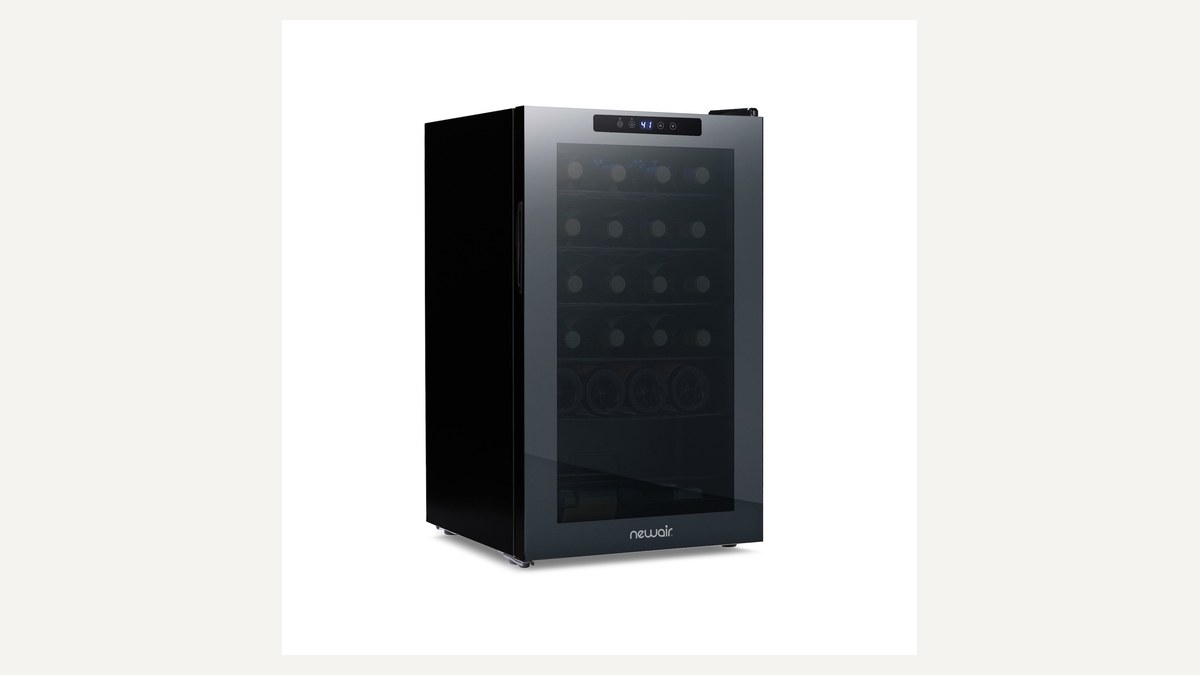
NewAir 24-Bottle Freestanding Wine Fridge
A vibration-dampened compressor and a wide 41°F to 64°F range make this the easiest way to store two dozen bottles properly in a small footprint.
From $369.99 at Amazon
BEST FOR SMALL CABINET GAPS
NewAir 15-Inch Built-In Beverage Cooler
A 15-inch-wide cooler that holds 96 cans and works built-in or freestanding, making it the best fit for slim cabinet gaps.
From $469.99 at Amazon
| Quick comparison | NewAir 24-Bottle Freestanding Wine Fridge | NewAir 15-Inch Built-In Beverage Cooler |
|---|---|---|
| Bottle Capacity | 24 standard 750ml wine bottles | — |
| Temperature Range | 41°F to 64°F | 37°F to 65°F |
| Cooling Type | Vibration-dampened compressor cooling | — |
| Installation Type | Freestanding | Built-in or freestanding |
| Price | From $369.99 at Amazon | From $469.99 at Amazon |
No authorized product photo yet for a pick? The table above and the Check Price button under each pick carry the decision — specs and prices are verified, never invented.
BEST OVERALL
NewAir 24-Bottle Freestanding Wine Fridge
Pros
- Holds 24 standard 750ml wine bottles
- Wide temperature range from 41°F to 64°F covers reds and whites
- Vibration-dampened compressor cooling protects wine from agitation
- Tinted tempered glass door shields bottles from light
Cons
- Freestanding only, so it can’t be installed under a counter
- 1-year limited warranty is shorter than some competitors offer
| Feature | Specification |
|---|---|
| Price | $369.99 at Amazon (checked November 21, 2026) |
| Bottle Capacity | 24 standard 750ml wine bottles |
| Temperature Range | 41°F to 64°F |
| Cooling Type | Vibration-dampened compressor cooling |
| Installation Type | Freestanding |
| Door Feature | Tinted tempered glass door |
| Warranty | 1-year limited manufacturer warranty |
The verdict: If you care about wine at all, the door of a kitchen refrigerator is the wrong home for it: too cold, too much vibration, and too much light exposure. This NewAir freestanding wine fridge fixes all three problems in a unit sized for small spaces. The vibration-dampened compressor keeps sediment from getting stirred up, the 41°F to 64°F range lets you set it for whites, reds, or something in between, and the tinted tempered glass door blocks the UV light that ruins wine over time. Just plan on giving it open air clearance, since it isn’t built to be recessed into cabinetry.
Compare prices: NewAir 24-Bottle Freestanding Wine Fridge
Compare prices
Amazon Lowest price
$369.99
Prices checked on November 21, 2026 and may change. We check prices at major retailers including Amazon, Walmart, Target and Best Buy, and list the best verified prices we find.

BEST FOR SMALL CABINET GAPS
NewAir 15-Inch Built-In Beverage Cooler
Pros
- Just 15 inches wide, sized for narrow cabinet gaps
- Holds up to 96 standard 12oz cans
- Front-vents for built-in use, or run it freestanding
- 37°F to 65°F range handles everything from soda to wine
Cons
- Only three shelves, so tall bottles require shelf rearranging
- 1-year limited warranty won’t cover you for long
| Feature | Specification |
|---|---|
| Price | $469.99 at Amazon (checked November 21, 2026) |
| Unit Width | 15 inches |
| Installation Type | Built-in or freestanding |
| Can Capacity | 96 standard 12oz beverage cans |
| Temperature Range | 37°F to 65°F |
| Shelving | 3 adjustable chrome wire shelves |
| Warranty | 1-year limited manufacturer warranty |
The verdict: Most beverage coolers claim to be built-in capable but actually need breathing room on all sides. This NewAir is genuinely sized for the job at 15 inches wide, which is the standard width for under-counter beverage centers and fits the slim gaps next to a fridge or dishwasher that nothing else seems to fit. The 96-can capacity is honest and generous for the footprint, and the three adjustable chrome wire shelves let you reconfigure the interior when the can rotation changes. If you’d rather not commit to cabinetry, it runs just as well as a freestanding unit, which makes it a rare flexible pick in this category.
Compare prices: NewAir 15-Inch Built-In Beverage Cooler
Compare prices
Amazon Lowest price
$469.99
Prices checked on November 21, 2026 and may change. We check prices at major retailers including Amazon, Walmart, Target and Best Buy, and list the best verified prices we find.

What to Look For in Kitchen & Coffee
Temperature range and controls
The single most important spec on a compact cooler is its temperature range, and it matters more than capacity. Wine is especially picky: whites generally want the mid-40s to low 50s in Fahrenheit, while reds do better in the mid-50s to mid-60s. A fridge with a narrow band forces you to compromise on one or the other. That’s why we flag the ranges on both of our picks. The NewAir wine fridge spans 41°F to 64°F, which comfortably covers both styles, and the beverage cooler runs even wider, from 37°F down at fridge-cold territory up to 65°F.
Check where the controls are, too. On small units, the thermostat is sometimes tucked inside or on the back, which is annoying if you tuck the fridge under a counter or against a wall. A front-facing digital control panel means you can adjust the temperature without pulling the unit out, and it makes it easy to check the setting at a glance rather than guessing from how cold the glass door feels.
One honest note: single-zone coolers like these hold one temperature for everything inside. If you regularly store both reds and whites and want each at its ideal serving temperature, you’d need a dual-zone model, which usually costs more and takes more space. For most small-space owners, one well-chosen setting is a perfectly fine trade-off.
Cooling type and safety certification
Compact coolers come with two basic cooling approaches, and the difference shows up in both noise and wine quality. Thermoelectric cooling is common in cheap small units: it’s quiet but weak, struggles in warm rooms, and often can’t hold a true fridge-cold temperature. Compressor cooling, which both of our NewAir picks use, is the same technology as your kitchen refrigerator. It cools faster, holds its set point better in a warm apartment, and reaches lower temperatures reliably.
For wine specifically, look for vibration damping. Constant vibration keeps sediment suspended in wine and can speed up aging in ways you don’t want. NewAir’s wine fridge specifically uses a vibration-dampened compressor, which is a meaningful feature rather than marketing filler if you’re storing bottles for more than a few weeks.
On safety, buy only units that are listed by a recognized testing lab (look for UL or ETL markings on the product listing or the unit itself). Any compressor-cooled appliance also needs proper ventilation clearance; even built-in-rated models need the airflow path their manual specifies. Cramming a cooler into a gap tighter than the manufacturer’s stated clearance is the most common way people overheat a compressor and kill a unit early. And since compact coolers often run continuously, a 1-year limited warranty is the norm rather than the exception; treat anything shorter as a red flag and anything longer as a bonus.
Size, fit, and dual controls
Measure twice before you order anything in this category, because compact cooler dimensions are deceptively inconsistent. Widths cluster around a few standard sizes, and the most useful one for under-counter work is 15 inches, which matches the cutout width of most built-in beverage centers. That’s exactly why the NewAir 15-inch cooler earns its spot on this list: it fits the narrow cabinet gap beside a refrigerator that full-width units can’t touch.
When measuring, don’t just check width. Note the height under your counter or the floor-to-ceiling space in your intended spot, and add the manufacturer’s recommended clearance at the back and sides for airflow. Freestanding-only units like the NewAir wine fridge typically need more open air around them than front-venting built-in models, so if you plan to recess the unit, confirm the installation type in the specs before buying, not after.
On controls, remember that single-zone units give you one dial or panel for the whole cabinet. If you’re choosing between two similar models, the one with the wider temperature range effectively gives you more flexibility from the same single control: a cooler that spans 37°F to 65°F can serve as a drink fridge in summer and a wine cabinet for a dinner party, while a narrow-range unit locks you into one use.
Shelving, interior layout, and care
Interior layout determines whether a cooler’s claimed capacity is real or theoretical. Chrome wire shelves are the standard for good reason: they’re strong, they don’t trap spills, and they let cold air circulate between levels. Both of our picks use this style. The beverage cooler’s three adjustable chrome wire shelves are the key detail here, because adjustability is what lets you switch between stacking 96 cans and making room for taller bottles or pitchers.
Before loading any cooler, take five minutes to plan the layout. Put the items you grab most often at eye level, keep heavy glass bottles on lower shelves where they’re more stable, and leave a little vertical headroom on at least one shelf for the awkward tall items you didn’t plan for. Overloading past the rated capacity restricts airflow and makes the compressor work harder, which shortens its life and raises the interior temperature.
Care for these units is simple but not zero-effort. Wipe wire shelves with a damp cloth and mild soap, and dry them fully before reinstalling to prevent water spots on the chrome. Clean the door gasket occasionally so it seals tightly, and if the unit has a glass door, a soft cloth and glass cleaner on the exterior keeps it presentable in an open living space. Never use abrasive scrubbers inside the cabinet, and if you’re storing wine long term, a quick shelf check every few months catches any bottle seated oddly before it becomes a leak.

The Bottom Line
For most small-space buyers, the choice comes down to what you’re cooling. If wine is the priority, the NewAir 24-Bottle Freestanding Wine Fridge is our best overall pick: its vibration-dampened compressor, wide 41°F to 64°F range, and light-blocking tinted glass door treat your bottles the way a proper cellar would, in a footprint that fits an apartment or dining nook. If drinks for a crowd are the priority, the NewAir 15-Inch Built-In Beverage Cooler is the smarter buy, with a 96-can capacity and a width that fits standard slim cabinet gaps whether you install it under a counter or run it freestanding. Both carry a 1-year limited manufacturer warranty and both prices were checked November 21, 2026; measure your space, confirm the clearance requirements in the manual, and either one will earn its spot.
Related Guides
Best Space Heaters for Bedrooms
Best Winter Boots for Snow and Ice
Best Heated Blankets and Throws
How We Choose
We evaluate Kitchen & Coffee by analyzing manufacturer specifications, safety certifications where they apply, verified owner feedback, and pricing trends across major online retailers. Rather than relying on brief single-use testing, our editorial team synthesizes real-world buyer experiences to evaluate how these products perform over months of regular use. We compare ratings, verified buyer reviews and prices across major retailers, and only list products from established brands with strong review records. We re-check prices and availability before publishing and update our picks when lineups change.
—
How GogoPik chooses products
We compare ratings, verified buyer reviews and prices across major retailers, and only list products from established brands with strong review records. We re-check prices and availability before publishing and update guides when picks change. Read our full selection standards · How we rate
Researched with AI assistance; every pick is reviewed and verified by our editor before publication.
Enjoying our guides? ☕ Support GogoPik on Ko-fi